
Data Management
Implement Data Management Solutions to Satisfy Increased Computing Power
29/11/2023 - 30 November 2023 ALL TIMES EST
With the increased demand in computing power from life science researchers and scientists tackling big data issues, data storage infrastructure must be able to scale to handle billions of data points and files efficiently. The problem is administration of data to ensure information can be integrated, accessed, shared, linked, analyzed, and maintained to effect change across the organization. How do you make sense of data and its content to create value? The Data Management track will explore these questions and other themes related to FAIR data, data reuse/governance/literacy, data federation, and standards/data curation/harmonization.
Wednesday, 29 November
Registration and Morning Coffee
Plenary Keynote
PLENARY KEYNOTE PROGRAM
Chairperson's Remarks
Welcome Remarks
PLENARY KEYNOTE CO-PRESENTATION:
MOSAIC: A Global Initiative to Deploy Spatial Omics and AI against Cancer



In June, Owkin and world-leading Cancer research institutions and technology companies from the US, France, Germany, and Switzerland unveiled MOSAIC, a $50 million initiative to use spatial omics technologies at unprecedented scale. The aim is to analyze the tumor microenvironment of more than a thousand patients in each of seven difficult-to-treat cancers and to develop and apply AI/ML tools to develop a spatial omics atlas that will help to advance novel therapies. In this session, we will present the scientific vision, the aims and role of participating institutions, and an update on progress in the project's first six busy months.
Grand Opening Coffee Break in the Exhibit Hall with Poster Viewing
ROLE OF DATA IN GENERATING BIOLOGICAL INSIGHTS
Organizer's Remarks
Eileen Murphy, Conference Producer, Cambridge Healthtech Institute , Conference Producer , Cambridge Healthtech Institute
Chairperson's Remarks
Ben Busby, PhD, Global Alliances Manager, Omics, NVIDIA , Global Alliances Manager, Omics , NVIDIA
Panel Moderator:
PANEL DISCUSSION:
Developing and Using Large- and Small-Scale TREs for Generating Biological Insights
Panelists:
Sponsored by: Catalyzing Data Management in Life Sciences: Empowering R&D through Innovative Unified Digital Platforms

Improvements in instrument proficiency from high frequency measurements to automated high throughput capabilities have led to an exponential increase in the data volumes generated in life sciences. However, leveraging data into actionable insight is impossible without contextualization. The presentation will discuss how unified digital platforms break down data silos to streamline R&D processes, accelerate research, drug discovery, and decision-making, optimizing efficiency and cost-effectiveness.
Networking Lunch in the Exhibit Hall with Poster Viewing (Sponsorship Opportunity Available)
DATA MINING, MODELING, MAPPING, AND COMPLIANCE CHALLENGES TO ADVANCE BIOMEDICAL RESEARCH AND DISCOVERY EFFORTS
Chairperson's Remarks
Christopher Southan, PhD, Honorary Professor, Deanery of Biomedical Sciences, University of Edinburgh , Honorary Professor, Deanery of Biomedical Sciences , University of Edinburgh
CO-PRESENTATION:
ICD10 Mapping and Biomarker Profiling Using UK Biobank Data to Improve Phenome-Wide Association Studies
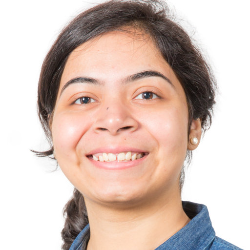
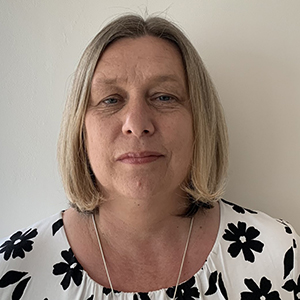
Genomic programs that want to increase numbers and extend ancestry in their biobanks, need to address the differences in phenomic data classification. Projects wanting to harmonize their clinical cohorts across projects need to understand the context of their biobanks and the intent of their project. I will discuss the UK Biobank (UKB) study containing detailed phenotypic data linked to medical records for approximately 500,000 participants and remapping ICD-9 to ICD10 WHO versions. You will learn about finding the ontology mapping in real-world evidence, transition from manual to automation methods, and challenges along with biomarker profiling to identify “missing casesâ€.Â
Unique Open Curated SAR Data from Patents in PubChem
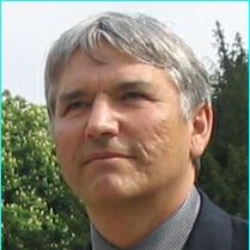
The large-scale automated extraction of chemical structures from patent documents by IBM, Google, WIPO and SureChEMBL have contributed over 40 million CIDs to PubChem but present major data quality filtration challenges. To facilitate community exploitation BindingDB has manually curated structure activity (SAR) data for ~0.4 million compounds from ~ 6000 patents. The data has recently been included in  ~ 12K new BioAssays in PubChem. An example from Abvie US9796708 "Pyrrolo [2,3-B] pyridine CDK9 kinase inhibitors", as BioAssay AID: 1797504 includes 1,352 IC50 values. The data mining opportunities these present, including AI modeling, will be outlined.
Decoding EU Privacy Legislation: Data Compliance Challenges and Solutions for Life Sciences

Ben Seretny, Head of DPOs, will provide valuable insights into EU/UK privacy laws and how life sciences organisations can increase patient and trial participant trust and engagement by implementing robust compliance processes.Â
- Overview of EU/UK privacy legislation and why it is applicable to organisations worldwide
- The many implications of processing personal data of EU/UK residents
- EU clinical trial regulations, including the CTIS and other jurisdictional challenges
- EU/UK data protection officers and representatives: when and why are they required??
Sponsored by: Conquering the Lab Data Deluge


This presentation will cover: Building a knowledge graph to contextualizing instrument data with projects, experiments, samples and subjects from research informatics applications; Making research data FAIR and AI ready; Providing scientists an intuitive environment to analyze all their scientific research data.
Sponsored Presentation (Opportunity Available)
Session Break and Transition to Plenary Keynote
Plenary Keynote
PLENARY KEYNOTE FIRESIDE CHAT
Chairperson’s Remarks
Allison Proffitt, Editorial Director, Bio-IT World and Clinical Research News , Editorial Dir , Bio-IT World
PLENARY KEYNOTE FIRESIDE CHAT:
Data Citizenship and Changing Data Culture

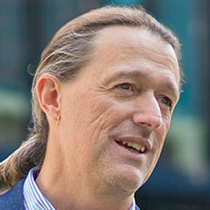
With thirty years of experience in informatics and data and big pharma positions at Roche and AstraZeneca, Bryn Roberts has a unique perspective on the data-growing pains now facing life sciences. Within life sciences organizations, there are both responsibilities and privileges associated with data production and use, he says. Data producers should share data within certain parameters, and data consumers should use and credit data fairly, he believes. In this fireside chat, Stan will interview Bryn who will share his insights into the state of data right now in life sciences, why data citizenship is the paradigm shift we all need to embrace, how to truly create a FAIR data culture, and how artificial intelligence and machine learning will most impactfully change our data landscape.
Welcome Reception in the Exhibit Hall with Poster Viewing
Close of Day
Thursday, 30 November
Registration and Morning Coffee
Plenary Keynote
PLENARY KEYNOTE PROGRAM
Chairperson’s Remarks
Cindy Crowninshield, Executive Event Director, Cambridge Healthtech Institute , Executive Event Director , Cambridge Healthtech Institute
Keynote Introduction
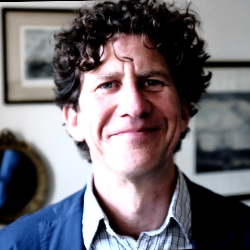
PLENARY KEYNOTE CO-PRESENTATION:
East London: A Global Hub for Digital Precision MedicineÂ
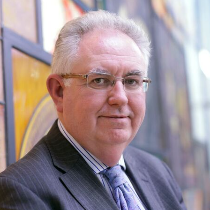
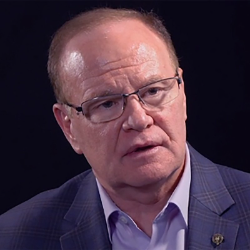
Barts Health NHS Trust and Queen Mary University of London (QMUL) are embarking on one of the world's most ambitious digital medicine initiatives. Director of the NIHR Barts Biomedical Research Centre, Prof Mark Caulfield, and newly appointed QMUL Honorary Professor Tom Chittenden will lay out this vision and its impact on patients and science. In one of the largest and most diverse NHS trusts, in the heart of the East London AI and medical research community, Barts and QMUL are investing £600m pounds to create new digital healthcare infrastructure and develop a world-leading open-access exascale causal AI computing platform. This will enable a newly detailed understanding of the biology of cancer, cardiovascular, and other diseases, driving cutting-edge drug and digital health development relevant to people of every continental ancestry. These assets will deliver the most advanced digital precision medicine to millions of people in local communities, and, through research and industry partnerships, to people and patients worldwide.  Â
Coffee Break in the Exhibit Hall with Poster Viewing
FAIR DATA PRINCIPLES: PRACTICAL USE-CASES AND LEARNINGS
Organizer's Remarks
Eileen Murphy, Conference Producer, Cambridge Healthtech Institute , Conference Producer , Cambridge Healthtech Institute
Chairperson's Remarks
Despoina Sousoni, PhD, Industry and Innovation Officer, ELIXIR-Hub , ELIXIR Industry and Innovation Officer , ELIXIR-Hub
Panel Moderator:
PANEL DISCUSSION:
Collaborative Efforts to Make Life Sciences Data More FAIR: Tools, Protocols, and Best Practices

Panelists:

Networking Lunch in the Exhibit Hall with Poster Viewing (Sponsorship Opportunity Available)
FAIR PRACTICES IN RESEARCH DATA MANAGEMENT TO ACCELERATE BIOMEDICAL DISCOVERY
Chairperson's Remarks
Ishwar Chandramouliswaran, Program Director, Office of Data Science Strategy, NIH , Program Director , Office of Data Science Strategy , NIH
Panel Moderator:
PANEL DISCUSSION:
FAIR Practices in Research Data Management to Accelerate Biomedical Discovery
Panelists:



Bio researchers require awareness of the effect that the environment has on research design and protocols. Collaboration between geoscientists, either directly or indirectly, provides the detailed information necessary to ensure successful research. At the AGU, the critical elements of FAIR data include 1) earth and environmental observational data, 2) the preservation repository selected for the data, and 3) the persistent identifier that is the beacon to the data and information about it. We will share the AGU’s work connecting researchers to these three critical elements, ensuring that research publications and data are linked to heighten reproducibility and transparency in science.
Close of Conference


#BioITExpo

2023 CONFERENCE PROGRAMS