
AI for Pharma
Leverage Artificial Intelligence and Machine Learning to Accelerate Drug Discovery and Development Efforts
29/11/2023 - 30 November 2023 ALL TIMES EST
The AI for Pharma track will explore the application of artificial intelligence and machine learning technologies to maximize and accelerate drug discovery and development efforts from early-stage adoption to practical application. Presentations will explore the role of artificial intelligence and machine learning in transforming disease understanding and target ID, approaches using AI and human expertise to help identify and deliver validated targets, as well as enhancements to chemical drug design and precision medicine. We will also explore how AI/ML efforts compare to tried-and-true successful discovery (drugs-to-market) methods.
Wednesday, 29 November
Registration and Morning Coffee
Plenary Keynote
PLENARY KEYNOTE PROGRAM
Chairperson's Remarks
Welcome Remarks

PLENARY KEYNOTE CO-PRESENTATION:
MOSAIC: A Global Initiative to Deploy Spatial Omics and AI against Cancer




In June, Owkin and world-leading Cancer research institutions and technology companies from the US, France, Germany, and Switzerland unveiled MOSAIC, a $50 million initiative to use spatial omics technologies at unprecedented scale. The aim is to analyze the tumor microenvironment of more than a thousand patients in each of seven difficult-to-treat cancers and to develop and apply AI/ML tools to develop a spatial omics atlas that will help to advance novel therapies. In this session, we will present the scientific vision, the aims and role of participating institutions, and an update on progress in the project's first six busy months.
Grand Opening Coffee Break in the Exhibit Hall with Poster Viewing
UNLOCKING THE POTENTIAL OF AI IN PRECISION HEALTH: OVERCOMING DATA CHALLENGES FOR PERSONALIZED CARE AND EARLY DISEASE DETECTION
Organizer's Remarks
Erin Kadelski, Associate Project Manager, Production, Cambridge Innovation Institute , Associate Project Manager , Production , Cambridge Innovation Institute
Chairperson's Remarks
Alexander Sherman, Director, Center for Innovation and Bioinformatics, Massachusetts General Hospital , Dir , Ctr for Innovation & Bioinformatics , Massachusetts General Hospital
Panel Moderator:
PANEL DISCUSSION:
Multiomics Data and AI

Panelists:


BUILDING AI/ML MODELS FOR DATA INSIGHTS TO FACILITATE DRUG DISCOVERY PIPELINES
Knowledge Factory Framework

The Knowledge Factory Framework is a novel ML-centric platform to capture information and build knowledge across the entire data landscape. The system leverages challenges such as resume mechanism from a model failure, restart mechanism for unprocessed files backed by plug and unplug mechanism for new models’ addition or existing models’ updates, knowledge repository curation, adaptability, scalability, and most importantly the mechanism for reusing the existing knowledge to enable the extraction of more information from the data.
CO-PRESENTATION:
Sponsored by: Closing the Loop: Empowering the Design-Make-Test-Analyze Cycle with AI


Data access, aggregation, and analysis guide R&D decisions, uncovering hypotheses and paving the way for the next. The challenge lies in timely, precise dissemination of pertinent information. Disconnected informatics systems often led to crucial decisions with insufficient data, especially in unstructured sources like lab notebooks. This presentation covers enhanced candidate tracking and accelerated market entry through Certara and ChemAxon integration, leveraging AI for data insights.
Networking Lunch in the Exhibit Hall with Poster Viewing (Sponsorship Opportunity Available)
PREDICTIVE AND GENERATIVE AI MODELS TO ACCELERATE DISCOVERY AND DEVELOPMENT
Chairperson’s Remarks
Tudor Oprea, MD, PhD, Chief AIDD Officer, Dompé , Chief AIDD Officer , Dompé
Predictive and Generative AI in Peptide Drug Discovery

Peptides represent a growing therapeutic space between small molecules and biologics. More than 80 peptide drugs have reached the market for a wide range of diseases. Due to their size and special composition, peptides can be approached from an AI perspective in a different way than small molecule drugs. In this presentation, we show the newest predictive and generative models for peptide discovery.
One GPT to Rule Them All: LLM-Aided Drug DiscoveryÂ
Expert Systems has developed DrugInteLLM, a suite of LLM experts that are specifically designed to address different tasks and activities related to early drug discovery. PharosGPT (targets, diseases, and ligands) identifies target-disease associations. With litGPT, we process subsets of the literature and patent corpus. ChEMBLGPT queries databases for bioactive compounds. Our machine learning platform has thousands of target-based models and hundreds of ADMET-based models, which are interfaced to ActivityGPT (which is tasked to predict bioactivity endpoints). We will briefly describe our platform for target and ligand selection, and how GPTs can support drug discovery.
CO-PRESENTATION: Augmenting Drug Discovery with Cloud-Based Predictive Insights at AstraZenecaÂ


The advent of artificial intelligence (AI) and cloud computing presents an opportunity to innovate drug discovery by fully leveraging data-driven modeling to reduce the number of cycles necessary to yield a clinical candidate. Here we will present the Predictive Insight Platform (PIP), a cloud-native modeling platform developed at AstraZeneca with a special emphasis on its architecture, integration, usage, and impact on drug discovery. We will also discuss challenges for creating a chemistry-aware autoscaling modeling platform and how we overcame those.
Sponsored by: Volume, Validity and Value: considerations when using full-text XML in text and data mining


Text and data mining remains an important part of research and development workflows. It’s important to consider the provenance of data, the type of data and what kind of outcome we are trying to achieve when choosing the XML content that will feed our workflows. In this talk, Carl Robinson will explore the use of full-text scientific articles XML in TDM workflows and some of the challenges that come with it.
Sponsored by: How to Make Your Lab AI-Ready

In this presentation we will discuss how to bridge the gap between scientific primary data and AI-driven science. We will explain the significance of data contextualization and harmonization and show how AI-ready data can enable organizations to fully exploit the potential of AI.
Session Break and Transition to Plenary Keynote
Plenary Keynote
PLENARY KEYNOTE FIRESIDE CHAT
Chairperson’s Remarks
Allison Proffitt, Editorial Director, Bio-IT World and Clinical Research News , Editorial Dir , Bio-IT World
PLENARY KEYNOTE FIRESIDE CHAT:
Data Citizenship and Changing Data Culture


With thirty years of experience in informatics and data and big pharma positions at Roche and AstraZeneca, Bryn Roberts has a unique perspective on the data-growing pains now facing life sciences. Within life sciences organizations, there are both responsibilities and privileges associated with data production and use, he says. Data producers should share data within certain parameters, and data consumers should use and credit data fairly, he believes. In this fireside chat, Stan will interview Bryn who will share his insights into the state of data right now in life sciences, why data citizenship is the paradigm shift we all need to embrace, how to truly create a FAIR data culture, and how artificial intelligence and machine learning will most impactfully change our data landscape.
Welcome Reception in the Exhibit Hall with Poster Viewing
Close of Day
Thursday, 30 November
Registration and Morning Coffee
Plenary Keynote
PLENARY KEYNOTE PROGRAM
Chairperson’s Remarks
Cindy Crowninshield, Executive Event Director, Cambridge Healthtech Institute , Executive Event Director , Cambridge Healthtech Institute
Keynote Introduction
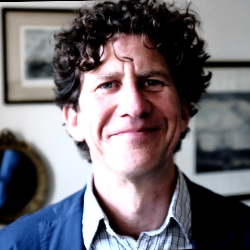
PLENARY KEYNOTE CO-PRESENTATION:
East London: A Global Hub for Digital Precision MedicineÂ

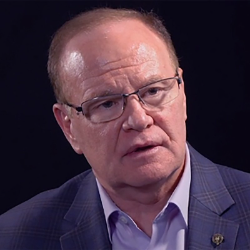
Barts Health NHS Trust and Queen Mary University of London (QMUL) are embarking on one of the world's most ambitious digital medicine initiatives. Director of the NIHR Barts Biomedical Research Centre, Prof Mark Caulfield, and newly appointed QMUL Honorary Professor Tom Chittenden will lay out this vision and its impact on patients and science. In one of the largest and most diverse NHS trusts, in the heart of the East London AI and medical research community, Barts and QMUL are investing £600m pounds to create new digital healthcare infrastructure and develop a world-leading open-access exascale causal AI computing platform. This will enable a newly detailed understanding of the biology of cancer, cardiovascular, and other diseases, driving cutting-edge drug and digital health development relevant to people of every continental ancestry. These assets will deliver the most advanced digital precision medicine to millions of people in local communities, and, through research and industry partnerships, to people and patients worldwide.  Â
Coffee Break in the Exhibit Hall with Poster Viewing
ADVANCING DRUG DISCOVERY AND DESIGN WITH INNOVATIVE AI-DRIVEN TOOLS
Organizer's Remarks
Erin Kadelski, Associate Project Manager, Production, Cambridge Innovation Institute , Associate Project Manager , Production , Cambridge Innovation Institute
Chairperson's Remarks
Iman Tavassoly, MD, PhD , Founder/CEO , QMed Insights
AI for Chemical Discovery—Strategies to Go from Hype to Reality

Recent years have seen increased talk around AI, both in industry and now consumers. Computer-aided drug design is a vital part of drug discovery, but we still see limitations; we cannot simply enter a target structure and get a hit drug. In this talk we’ll explore the practical strategies and tactics we propose are needed to deliver on the AI drug discovery vision.
Advanced Artificial Intelligence Approaches for High-Dimensionality Reduction in Quantitative Systems Pharmacology

In quantitative systems pharmacology (QSP), the identification of predictive features from intricate, high-dimensional multi-omics datasets is crucial for unraveling and addressing therapeutic responses. The integration of artificial intelligence (AI) methodologies has emerged as a promising solution to reduce the complex feature space in various data domains such as in vitro, in vivo, and clinical settings. Here we introduce a collection of innovative AI-driven tools specifically tailored for high-dimensionality reduction in QSP.
Augmented Drug Design at AstraZeneca

Artificial Intelligence has emerged as a transformative force in the field of drug design, promising enhanced efficiency, precision, and speed. In this presentation, we will delve into the challenges encountered in the drug design process and detail our approach to overcoming these hurdles by building and implementing new AI capabilities. We will showcase a selection of real-world projects, illustrating the impact of these techniques on the advancement of drug discovery.
Sponsored by: Incorporating Substance and Material Composition Data into Machine Learning Applications

As organizations seek to augment their experimental capabilities with machine learning, accounting for substance and material composition information can help reveal latent insights. Practical applications and use cases, that can be implemented now, will be discussed.
Networking Lunch in the Exhibit Hall with Poster Viewing (Sponsorship Opportunity Available)
EXTRACTING KNOWLEDGE FROM DEEP LEARNING MODELS WITH KNOWLEDGE GRAPHS
Chairperson's Remarks
Ben Busby, PhD, Global Alliances Manager, Omics, NVIDIA , Global Alliances Manager, Omics , NVIDIA
Presentation to be Announced
AI OPPORTUNITIES FOR DRUG DISCOVERY AND DEVELOPMENT
Growth Opportunities in Tech-Enabled Drug Discovery and Development

As the industry continues its innovation spree across small and large molecules, Tech-enabled drug discovery vendors are re-establishing themselves as digital biotechnology companies with in-house therapeutic pipelines along-with platform-based and project-based partnerships to pharma players. Also, incorporating integrated AI-driven solutions in clinical trial design will aid in reducing costs, timelines and increasing efficiency through DCT models. The presentation will explore key trends and opportunities offered by AI/ML to different types of stakeholders across the drug discovery and development value chain.
Close of Conference


#BioITExpo


2023 CONFERENCE PROGRAMS